
Choosing Group Activities for All Ages
A group activity works for all ages when it offers adjustable participation, shared goals, and a pace that nobody has to fake enjoying. Choosing a group activity for all ages is less about finding one perfect game and more about building a structure where a 7-year-old and a 70-year-old can both win something. The key planning principles are skill-level matching, flexible rules, and the split-and-reunite scheduling method. Get these three right, and the rest of the planning falls into place.

What key factors determine if a group activity works for all ages?
Skill level, not age, is the real filter for mixed-group success. A 10-year-old who plays chess daily will outperform a 40-year-old who has never touched a board. Sorting participants by ability rather than birthday keeps the energy competitive and fair. Activities like Uno, cooperative jigsaw puzzles, and trivia with era-based categories naturally create these gradations without anyone feeling singled out.
The second factor is interaction level. Some people want to be at the center of the action. Others prefer a supporting role. Interaction style and planning complexity define activity fit more than the activity type alone. A scavenger hunt works because it lets participants choose their intensity. A relay race does not, because it forces everyone into the same physical demand at the same time.
Physical versus non-physical balance matters too. A group that includes toddlers, teenagers, and grandparents needs at least one low-exertion option running alongside any active game. Lawn games like cornhole or bocce ball, for example, let older participants stay involved without strain. Cooperative puzzles or trivia rounds give younger kids a mental challenge that keeps them focused.
Here is a quick checklist for evaluating any activity before you commit:
Adjustable difficulty: Can you add a handicap or modify the rules mid-game?
Multiple roles: Does the activity allow spectators to become participants naturally?
Low planning friction: Can you explain the rules in under two minutes?
Natural gravitation: Will people drift toward it without being pushed?
Cooperative option: Can the group work together instead of competing?
Pro Tip:Watch what people do in the first 10 minutes of any free-time block at a gathering. The activities they gravitate toward without prompting are the ones worth building your planned schedule around.
How should you schedule group activities for mixed ages?
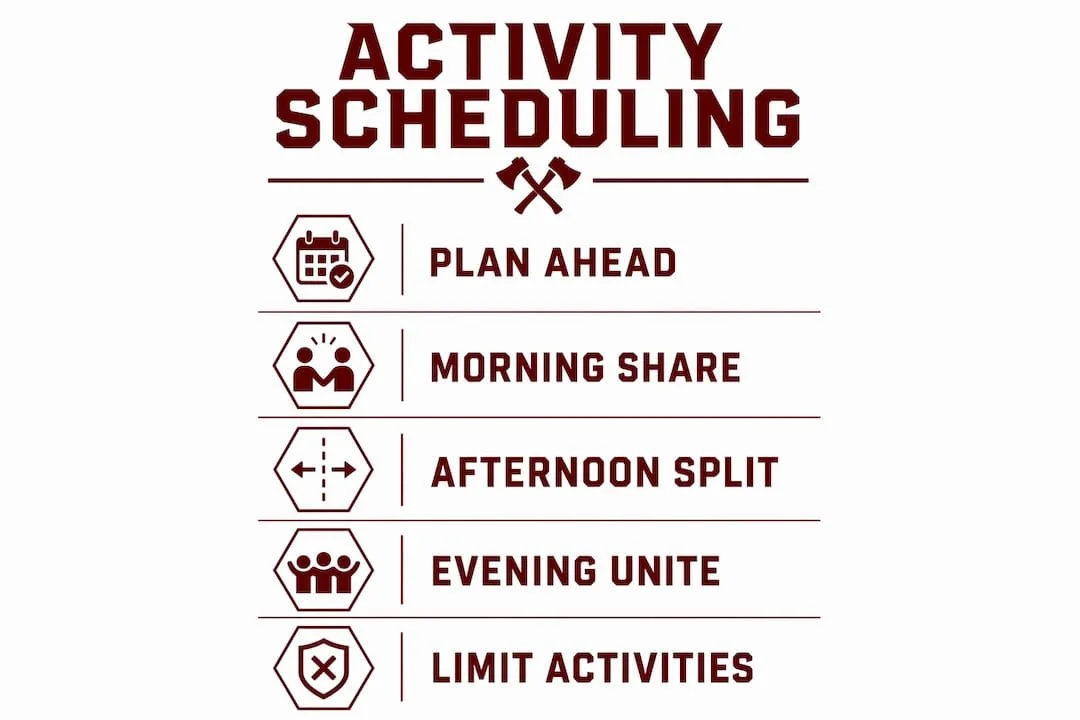
The split-and-reunite method is the most effective scheduling framework for multigenerational groups. One shared morning activity brings everyone together. The afternoon splits by energy level, with high-energy participants doing something active while others rest or explore at their own pace. A group dinner or evening event reunites everyone on equal footing.
One planned group activity per morning is the recommended cap for multigenerational outings. Stacking two or three organized events back to back exhausts younger children and older adults first, which creates frustration for everyone. Free afternoons are not wasted time. They are recovery time that makes the next shared activity more enjoyable.
Overscheduling is the primary cause of participant fatigue and diminished enjoyment in mixed-age group events. This is the most common mistake first-time group planners make. The fix is simple: cap your event count and protect downtime as if it were a scheduled activity.
Here is a practical scheduling framework for a full-day mixed-age event:
Pre-event survey (3–6 months out): Collect physical limits, dietary needs, and activity preferences from all participants.
Morning anchor activity: Choose one shared, low-friction activity that accommodates all skill levels.
Afternoon split: Offer two tracks. One active, one relaxed. Let participants self-select.
Evening reunion: A shared meal, trivia round, or social activity that requires no physical output.
Buffer time: Build 30-minute gaps between transitions. Groups always run late.
For event sizing, a half-day event should cap at 5–7 activities, and a full-day event at 8–12. Exceeding these numbers pushes participants past their enjoyment threshold. Use a tool like Splitwise to manage shared costs transparently among adult participants, especially when the group includes families with different budgets.
Pro Tip:Send a one-page pre-event survey at least three months out. Ask three questions: What activity would you most enjoy? What physical limitations should we know about? What is your budget comfort level? The answers will cut your planning time in half.
Event TypeMax ActivitiesBest FormatKey ConsiderationHalf-day outing5–7Shared anchor + free timePrioritize low-friction gamesFull-day event8–12Split-and-reuniteBuild in rest blocksMulti-day trip1 per morningMorning shared, afternoon splitGather preferences 3–6 months ahead
What are the best types of activities for mixed-age groups?
The best group activities for everyone share one trait: they scale naturally. Trivia with questions drawn from multiple decades keeps grandparents and grandchildren equally invested. Karaoke removes skill entirely and replaces it with courage, which levels the field fast. Collaborative puzzles reward patience over speed, making them ideal for groups with wide age gaps.
Cooperative formats consistently outperform competitive ones in mixed-age settings. When the goal is shared, nobody gets eliminated and nobody feels like dead weight. Games like Capture the Flag work well when you assign roles strategically. Faster players handle open-field runs. Slower or younger players guard the flag. Everyone contributes at their own level.
Here is a breakdown of activity types by physical demand, interaction style, and age flexibility:
ActivityPhysical DemandInteraction LevelAge FlexibilityTrivia (multi-era)LowHighExcellentScavenger HuntModerateHighExcellentKaraokeLowHighExcellentLawn Games (cornhole, bocce)Low to moderateModerateVery GoodCooperative PuzzlesNoneModerateVery GoodNature WalkLow to moderateLowGoodAxe ThrowingLowHighGood (supervised)Cooking ClassLowHighVery GoodFour CornersModerateHighGood
Activities worth highlighting for family-friendly group games include:
Scavenger hunts: Customizable clues by difficulty level keep all ages engaged simultaneously.
Tail Tag: Simple rules, short bursts of activity, and easy modifications make it accessible for ages 5 and up.
Cooking classes: Shared goal, no losers, and a meal at the end. Few activities beat this for multigenerational groups.
Boating or nature walks: Low physical demand with natural conversation opportunities.
Axe throwing: Free coaching from professionals removes the skill barrier entirely, making it genuinely accessible for first-timers of all ages.
Pro Tip:Avoid activities where one person’s failure stops the whole group. Choose formats where individuals can drop out or scale back without disrupting the experience for everyone else.
What common challenges come up with mixed-age group planning?
The biggest challenge is not finding the right activity. It is avoiding the wrong structure around a good one. Layered difficulty and natural skill gradations keep toddlers to teens engaged, but only if the activity format supports them. A competitive elimination game with no modifications will lose half your group in the first round.
Here are the most common pitfalls and their direct solutions:
Mismatched skill levels: Use house rules and handicaps to rebalance. Give younger players a head start in races, or assign bonus points for less experienced participants in trivia.
Overplanning: Cap your activity count. Protect free time. Fatigue is the fastest way to end a good event early.
Forced participation: Never require anyone to join a specific game. Social background activities like axe throwing or a scavenger hunt let people opt in at their own comfort level.
Physical exclusion: Always run a low-exertion parallel option. If the main group is doing a high-energy relay, have a seated trivia round available simultaneously.
Budget friction: Use Splitwise or a similar cost-sharing tool to keep expenses visible and fair for all adult participants.
The most inclusive group activities are not the ones with the most elaborate rules. They are the ones where nobody feels like they have to perform to belong.
Managing physical limitations requires honest communication before the event, not improvised accommodations on the day. Gathering this information 3–6 months in advance, as part of your pre-event survey, gives you time to select or modify activities accordingly.
Key takeaways
The most effective approach to choosing group activities for all ages combines skill-level matching, the split-and-reunite scheduling method, and cooperative game formats that adjust to the group rather than forcing the group to adjust to them.
PointDetailsSkill over ageMatch activities to ability levels, not birthdays, for genuine engagement across the group.Split-and-reunite schedulingShare a morning activity, split the afternoon by energy, and reunite for dinner or an evening event.Cap your activity countLimit half-day events to 5–7 activities and full-day events to 8–12 to prevent fatigue.Use house rulesHandicaps and cooperative scoring keep competitive games fair and fun for all skill levels.Plan 3–6 months aheadGather physical limits and preferences early so activity choices reflect the actual group.
Why i think most group activity planning gets it backwards
Most people start with the activity and then try to fit the group around it. That is the wrong order. The group’s energy range, physical limits, and social comfort level should define the activity, not the other way around.
I have seen well-intentioned planners book high-energy obstacle courses for multigenerational family reunions, then spend the whole day managing the fallout. The kids loved it. The grandparents sat on the sidelines. The parents felt guilty. Nobody had the great time that was promised.
The split-and-reunite approach changed how I think about this entirely. When you stop trying to find one activity that works for everyone and instead build a structure that accommodates different energy levels at different times of day, the whole event relaxes. People stop feeling obligated and start actually enjoying themselves.
Simple games with adjustable rules are almost always better than elaborate ones with fixed formats. Axe throwing at Thecutaxethrowing is a good example. The activity scales naturally. Beginners get free coaching. Experienced throwers can challenge themselves with stars and knives. Nobody is waiting for their turn to feel included. The social atmosphere does the heavy lifting.
The best feedback I ever got after a group event was: “I didn’t feel like I had to try hard to have fun.” That is the goal. Build the structure right, and the activity almost does not matter.
— Tony
Plan your next group event at Thecutaxethrowing
If you are looking for a group activity in College Station that genuinely works for mixed ages and skill levels, Thecutaxethrowing is worth a serious look. Free professional coaching means first-timers of any age can step up to the lane with confidence. The social atmosphere handles the rest, with local craft beer, complimentary snacks, and a venue designed for groups who want to celebrate, connect, and compete at their own pace.
From trivia nights to axe throwing socials, Thecutaxethrowing runs a full calendar of group-friendly events built for exactly the kind of mixed-age, mixed-skill crowd this guide is about. Check the upcoming events page and find the right fit for your group.
FAQ
What makes a group activity truly inclusive for all ages?
An inclusive activity offers adjustable difficulty, multiple participation roles, and a cooperative option so no one is excluded by age or ability. Skill-level matching matters more than age-based sorting.
How far in advance should you plan a mixed-age group event?
Plan 3–6 months ahead to gather physical limits, dietary needs, and activity preferences from all participants before committing to a venue or format.
What is the split-and-reunite scheduling method?
The split-and-reunite method schedules one shared morning activity, splits the afternoon by energy level, and reunites the group for a shared dinner or evening event. It is the most effective framework for multigenerational groups.
How many activities should a full-day group event include?
A full-day event should include no more than 8–12 total activities, and a half-day event no more than 5–7. Exceeding these numbers leads to participant fatigue and reduced enjoyment.
How do house rules help in mixed-age group games?
House rules and handicaps rebalance competitive games by giving less experienced players a scoring advantage or shifting the goal from winning to cooperative completion. This keeps all participants engaged and the atmosphere positive.
